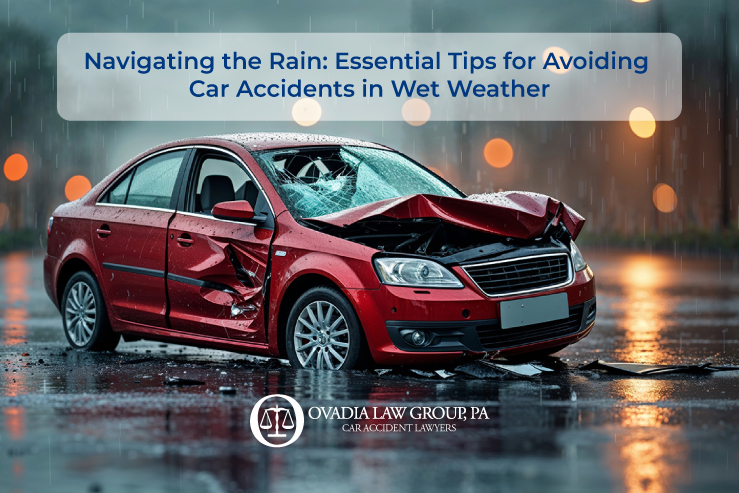
Driving in the rain is more than just an inconvenience, it’s one of the most dangerous conditions motorists face. Even light rain drastically reduces visibility, affects traction, and increases the risk of collisions. As a trusted Florida personal injury firm, Ovadia Law Group, PA, understands the impact wet weather has on drivers and the devastating consequences of rain-related car accidents.
In this article, we’ll break down why rain is such a risk factor, share practical driving tips, and explain what to do if you’re involved in a weather-related crash.
Rain Isn’t Just a Nuisance, It’s a Real Threat
Many drivers underestimate how dangerous rain can be. They might lower their speed slightly but often fail to adjust enough to the conditions. Consider the numbers:
- The Federal Highway Administration reports that over 70% of weather-related crashes occur on wet pavement, and nearly half happen during rainfall.
- Rain (including mist and drizzle) contributes to over half a million crashes every year in the U.S., resulting in around 219,000 injuries and 2,800 fatalities.
- Even light rain can raise the risk of a fatal accident by more than 30%, especially during early morning commutes when visibility is already limited.
In Florida, where sudden downpours are typical and highways often flood, these risks are even higher.
6 Smart Driving Habits for Rainy Roads
So, how can you stay safe when the skies open up? Practicing the proper habits dramatically reduces your risk of a collision.
1. Slow Down and Be Smooth
The speed limit is designed for ideal conditions. On wet roads, those limits are too high. Experts recommend:
- Reducing your speed by 5–10 mph in the city
- Cutting 10–15 mph on highways when the rain is steady or heavy
Just as important: keep your driving smooth. Sudden braking, sharp steering, or quick acceleration can cause your tires to lose traction. Smooth, gradual inputs help your tires maintain grip on slick surfaces.
2. Increase Following Distance
On a sunny day, the two-second rule works well. In the rain, it isn’t enough. Instead, adopt a three-to-four second following distance—even more if rain is pouring.
Why? Stopping distances on wet pavement can double compared to dry roads. Leaving more space gives you the reaction time you’ll need if the car in front of you brakes suddenly.
3. Use Headlights Always
Many states, including Florida, legally require drivers to turn on their headlights whenever windshield wipers are in use. But even where it’s not the law, it’s common sense.
Rain reduces visibility for everyone. Headlights help you see the road better and make sure other drivers see you sooner. Avoid high beams, though—rain can reflect the extra light and make visibility worse.
4. Watch Out for Hydroplaning
Hydroplaning happens when water builds up in front of your tires faster than they can push it away, causing your vehicle to ride on a thin layer of water instead of the road.
If you hydroplane:
- Stay calm, don’t slam the brakes.
- Ease off the accelerator gradually.
- Steer gently in the direction you want the car to go.
- Wait until your tires reconnect with the pavement before accelerating again.
The best way to prevent hydroplaning is to slow down, especially when rain first starts and oils on the road rise to the surface.
5. Check Your Car Before It Rains
Preventive maintenance goes a long way in keeping you safe.
- Tires: Check tread depth regularly. Bald or underinflated tires are far more likely to hydroplane.
- Wipers: Replace blades at the first sign of streaking. Poor wipers can reduce visibility to nearly zero in a storm.
- Brakes: If your brakes squeal, grind, or feel soft, get them inspected immediately.
- Lights: Make sure headlights, brake lights, and turn signals are working.
Even a brand-new car can become a hazard if these basics are ignored.
6. Know When to Pull Over
Sometimes the safest option is not driving at all. If rain is coming down so hard that you can’t see beyond your hood, carefully pull over to a secure location. Turn on your hazard lights and wait until the storm passes.
This is especially critical during thunderstorms, when lightning, flooding, or falling debris can make it unsafe to continue.
What to Do If You’re in a Rain-Related Accident
Despite your best efforts, you can’t control other drivers—or Mother Nature. If you’re involved in an accident during rainy weather, follow these steps:
- Check for injuries: Call 911 immediately if anyone is hurt.
- Move to safety: If your vehicle is operable, get to the shoulder or a safe area.
- Document the scene: Take photos of vehicle damage, road conditions, and weather.
- Exchange information: Get the other driver’s details and any witness contacts.
- Notify your insurer: Report the crash promptly.
- Call Ovadia Law Group, PA: Protect your rights by speaking with an experienced accident attorney, call 855-633-3223
Florida’s insurance laws are complex. Because the state follows a no-fault system, your insurance may cover initial medical expenses, but that doesn’t always cover the full cost of your injuries. You may still need to pursue a claim against the at-fault driver for damages.
How Ovadia Law Group, PA Can Help
At Ovadia Law Group, we’ve built our reputation on standing up for accident victims throughout Florida. Here’s what sets us apart:
- Free consultations: You don’t pay unless we win your case.
- Experience with weather-related accidents: We understand how rain, flooding, and storms affect liability and claims.
- Personalized approach: We take the time to investigate your case thoroughly and fight for the compensation you deserve.
If you’ve been hurt in a rain-related crash, you may be entitled to recover damages for:
- Medical bills
- Lost wages
- Pain and suffering
- Property damage
Don’t face the aftermath of a car accident alone.
Quick-Reference Rain Safety Checklist
| Before driving | Tires, brakes, wipers, lights, and fluids in good shape |
| During rain | Reduce speed, increase following distance, headlights on |
| Hydroplaning? | Ease off gas, steer gently, avoid braking hard |
| Storm Conditions | Pull over safely, hazard lights on, wait it out |
| After Accident | Call 911 if needed, document the scene, and contact Ovadia Law Group |
Final Thoughts
Rainy roads are an unavoidable part of life in Florida. But with preparation, patience, and the proper driving habits, you can dramatically reduce your risk of being involved in a serious crash.
And if the unexpected does happen, remember, you don’t have to navigate the legal aftermath alone.
📞 Call Ovadia Law Group, PA today at 855-633-3223 for a free consultation. We’ll stand by your side and fight to get you the compensation you deserve.